


You open a blank document. The cursor blinks. You have a deadline in two hours and zero inspiration. Sound familiar?
Every writer, marketer, and content creator has been there. The good news? Artificial intelligence has quietly transformed the way we write, research, and publish content. Whether you are a solo blogger, a freelance copywriter, or part of a large marketing team, there is now an AI writing tool built for your exact needs.
But with dozens of options flooding the market, how do you choose the best AI writing tool for you?
This guide breaks down what AI writing tools actually do, what to look for before picking one, and which tools are leading the pack in 2025. By the end, you will know exactly where to start.
What Is an AI Writing Tool and How Does It Work?
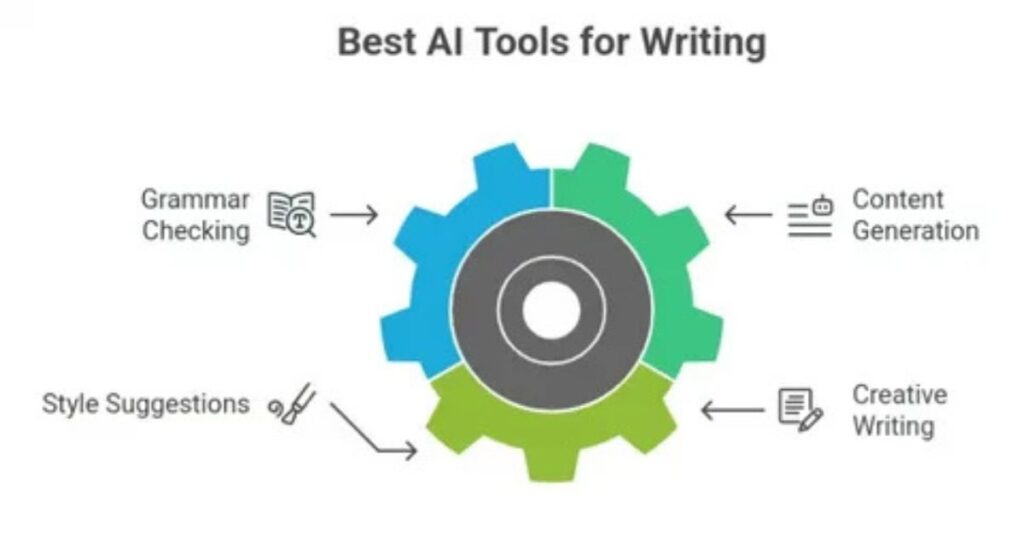
An AI writing tool is a software application that uses artificial intelligence, specifically large language models (LLMs), to help you generate, edit, and improve written content.
Think of it as a smart writing assistant that never gets tired. You give it a prompt, some context, or a few keywords, and it produces text that you can then refine and personalise.
These tools are trained on massive amounts of text data from across the internet, which means they can write blog posts, social media captions, email subject lines, product descriptions, and much more.
However, it is important to understand what AI writing tools are not. They are not replacements for human creativity, expertise, or judgment. They are powerful accelerators. The best results always come when a skilled writer guides the AI with thoughtful prompts and then adds their own voice, perspective, and fact-checking.
Why Are AI Writing Tools So Popular Right Now?

The demand for content has never been higher. Brands need blog posts, newsletters, social media updates, website copy, and more, often on a daily basis.
Producing all of that manually is exhausting and expensive. AI writing tools solve this problem by handling the heavy lifting, generating first drafts, suggesting headlines, rephrasing sentences, and even optimising for SEO.
According to research by SurveyMonkey, 90% of marketers report using AI tools to make faster decisions. And a report by Semrush found that 65% of companies have seen improved SEO results after incorporating AI into their content workflow.
These are not small numbers. They reflect a real shift in how content is being created at scale.
What to Look for in the Best AI Writing Tool

Before diving into individual tools, it helps to know what separates a great AI writing tool from a mediocre one.
The first thing to consider is ease of use. A tool should feel intuitive from the moment you log in. If you need hours of tutorials just to generate a paragraph, it is probably not the right fit for most writers.
The second factor is output quality. The text generated should sound natural, not robotic. It should flow well and require minimal editing to be usable.
Third, think about templates and use cases. The best AI writing tools come loaded with templates for different content types, whether that is a blog introduction, a product description, a social media caption, or an email subject line.
Fourth, consider SEO features. If you are creating content for search engines, you want a tool that understands keywords, search intent, and how to structure content for ranking.
Finally, look at integration options. A tool that works inside your existing workflow, connecting with Google Docs, WordPress, or your CMS, will save you a significant amount of time.
The Best AI Writing Tools Worth Trying in 2025

ChatGPT: The Best All-Round Starting Point
ChatGPT, developed by OpenAI, is arguably the tool that made AI writing mainstream. Launched to the public in late 2022, it quickly became the go-to platform for writers exploring artificial intelligence for the first time.
Its biggest strength is versatility. You can use it to brainstorm blog post ideas, write meta descriptions, generate headline variations, rephrase sentences, summarise long documents, and cluster keywords for SEO research.
The interface is conversational, which makes it feel less like using a tool and more like chatting with a knowledgeable colleague. You type a request in plain language, and ChatGPT responds with polished, coherent text.
ChatGPT holds a 4.7 out of 5 stars rating on G2, making it one of the highest-rated AI writing tools among professional users. In a 2024 poll of content marketers and SEO professionals, 68% of respondents named ChatGPT the most reliable and trustworthy AI chat tool available.
It is a natural first choice for freelancers, solopreneurs, and anyone just starting out with AI-assisted writing.
Practical tip: The quality of what you get out of ChatGPT depends almost entirely on what you put in. The more specific and detailed your prompt, the better the output.
Google Gemini: Best for SEO-Aligned Content
Google Gemini stands out for one very compelling reason. When it comes to SEO, you are asking Google itself what kind of content performs best according to its own algorithms.
That is a meaningful edge that most other tools simply cannot offer.
Gemini can pull in real-time information from across the web, which means it can reference current events, recent data, and timely topics that other AI tools without live search access might miss.
The interface is clean and easy to navigate, with options to choose between short, snappy responses and more detailed, in-depth answers. Content marketers working on SEO strategy will find Gemini particularly useful for drafting, rephrasing, and aligning copy with what Google currently rewards.
Gemini also integrates smoothly with Google Workspace, making it a natural fit for teams already working inside Google Docs, Sheets, and Gmail.
Practical tip: Use Gemini to cross-check your content ideas and headlines. Ask it directly how well a topic aligns with current search trends, and use that insight to sharpen your angle.
Jasper AI: Best for Marketing Teams and Enterprises
Jasper is one of the most widely used AI writing platforms for professional marketing teams, and for good reason.
It comes with over 50 templates covering everything from Amazon product descriptions and meta titles to social media posts, email subject lines, and video descriptions. This makes it a practical choice for teams that need to produce a wide variety of content types from a single platform.
One of Jasper’s strongest features is its ability to maintain brand voice consistently across a team. You can set content guidelines once, and every output will reflect your brand tone, whether it is written by a junior marketer or a senior copywriter.
Jasper holds a 4.7 out of 5 stars rating on G2, reflecting strong satisfaction among enterprise users.
It is worth noting that, like any AI tool, Jasper works best when paired with human expertise. For niche topics or highly technical subjects, the output will need careful review and editing before publication.
Practical tip: Use Jasper’s Blog Post Intro template when you are stuck on where to begin. A strong opening paragraph often unlocks the rest of the article.
Grammarly: Best for Editing and Polishing Your Writing
Grammarly takes a different approach from most AI writing tools. Rather than generating content from scratch, it focuses on making your existing writing better.
It catches spelling mistakes, grammatical errors, weak sentence structure, and unclear phrasing in real time. As you type, it offers suggestions that you can accept with a single click.
What makes Grammarly particularly powerful is its compatibility. It works inside Google Docs, Microsoft Office, and your web browser, which means you can polish your writing wherever you work without switching between apps.
For content writers who produce a lot of material and need a reliable proofreading layer, Grammarly is one of the most practical tools available. The free version is surprisingly capable, and the premium upgrade adds tone adjustments, clarity improvements, and plagiarism checking.
Practical tip: Do not use Grammarly as your final reader. Use it as your first pass, then read your own work out loud to catch anything the tool might have missed.
Surfer SEO: Best for Content That Ranks on Google
If your primary goal is creating content that ranks well in search engines, Surfer SEO deserves a serious look.
Surfer analyses the top-ranking pages for your target keyword and tells you what they have in common. It then gives you real-time recommendations as you write, including suggested word count, how often to use specific keywords, and how to structure your headings.
The result is a live SEO score that updates as you type, giving you instant feedback on whether you are heading in the right direction. You do not need to be an SEO expert to use it. The guidance is practical and easy to follow.
Surfer integrates directly with Google Docs and WordPress, which means you can optimise your content inside the tools you already use every day.
Practical tip: Use Surfer’s content brief feature before you start writing. Having a clear outline based on what already ranks will save you time and improve the quality of your finished piece.
Rytr: Best for Quick Drafts on a Budget
Rytr is a lightweight but capable AI writing tool that punches above its weight class.
Its standout feature is the ability to customise tone. With more than 20 writing styles available, from casual and conversational to formal and persuasive, Rytr gives writers fine-grained control over how their content sounds.
You can also select a creativity level, ranging from accurate to maximally creative, which lets you experiment with different directions before settling on a final approach. Rytr supports over 25 languages, making it a practical choice for teams working across global markets.
It holds a 4.7 out of 5 stars rating on G2 and is particularly popular among individual creators and small teams who want reliable output without a steep learning curve or a large monthly bill.
Practical tip: Generate three variations of the same content using Rytr’s multiple output feature. Mixing elements from different versions often produces better results than using any single draft on its own.
Copy.ai: Best for Marketing Copy and Campaign Content
Copy.ai is purpose-built for marketers who need a steady stream of engaging copy across multiple formats.
It comes with over 90 templates covering blog outlines, email sequences, product descriptions, ad copy, social media captions, and more. One of its most practical features is the ability to repurpose existing content, turning a blog post into a series of social updates or transforming a sales call transcript into a written summary.
Copy.ai supports more than 25 languages, which is a significant advantage for brands with international audiences.
The main trade-off is that outputs often need a meaningful amount of editing to match your brand voice closely. AI-generated copy tends to read as somewhat generic without human refinement on top.
Practical tip: Feed Copy.ai a few examples of your best-performing content before generating new material. The more context you provide about your tone and audience, the more useful the output will be.
How to Get the Most Out of Any AI Writing Tool

Choosing the right tool is only half the equation. How you use it matters just as much.
Start with a clear, specific prompt. Vague instructions produce vague output. If you want a blog introduction targeting a specific audience about a specific problem, say exactly that.
Always fact-check AI-generated content before publishing. These tools are trained on existing data and can occasionally produce inaccuracies, especially for technical or niche topics.
Use AI for the parts of writing that drain your energy, such as first drafts, headline variations, and meta descriptions, and reserve your own creative energy for the parts that require genuine expertise and original thinking.
Think of AI as your research assistant, your brainstorming partner, and your first-draft generator. The final voice should always be yours.
Which Is the Best AI Writing Tool for You?
The honest answer is that there is no single best AI writing tool for everyone. The right choice depends on what you need most.
If you are just starting out and want an all-purpose assistant, begin with ChatGPT. If SEO performance is your top priority, explore Surfer SEO or Google Gemini. If you are part of a marketing team producing content at scale, Jasper and Copy.ai are worth a closer look. If you want to improve the quality of your existing writing, Grammarly is hard to beat.
The most important thing is to start. Pick one tool, spend a week getting comfortable with it, and pay close attention to where it saves you time and where it still needs human input.
AI writing tools are not magic. But when used thoughtfully, they are genuinely powerful, and the writers who learn to use them well will have a significant advantage over those who do not.
Start with one tool. Master it. Then build from there.