

Imagine finishing in one hour what used to take an entire workday.
That is the reality for millions of professionals today, thanks to the rise of artificial intelligence tools. Whether you are a solo creator, a marketer at a growing startup, or a developer building complex software, there is now an AI tool designed to make your life significantly easier.
But here is the challenge: the market is flooded. There are hundreds of tools claiming to be the “best,” and without a clear guide, choosing the right one feels overwhelming.
This post cuts through the noise. You will find a carefully curated breakdown of the best AI tools available right now, organized by category so you can quickly find what matters most to your workflow.
What Makes an AI Tool Worth Using?
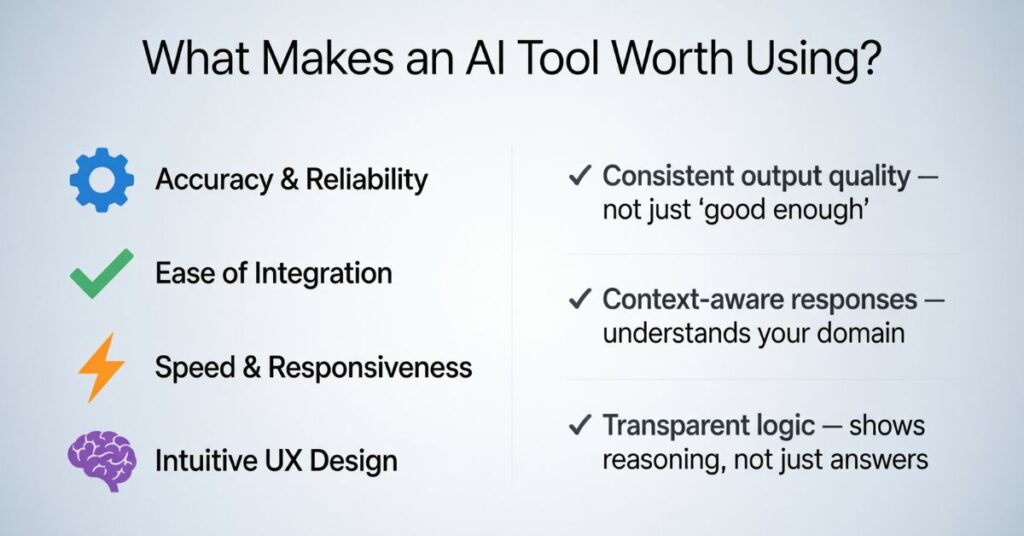
Before diving into specific tools, it helps to understand what separates a genuinely useful AI tool from one that just sounds impressive in a demo.
The best AI tool for any person or team shares a few common qualities. It actually saves time rather than creating extra steps. It produces results accurate enough to use with minimal editing. It integrates smoothly with the tools you already rely on. And it has a learning curve short enough that you can see value within the first few sessions.
Keep these four factors in mind as you explore the categories below. The “best” tool is always the one that fits your specific situation, not the one with the longest feature list.
Best AI Tools for Writing and Content Creation
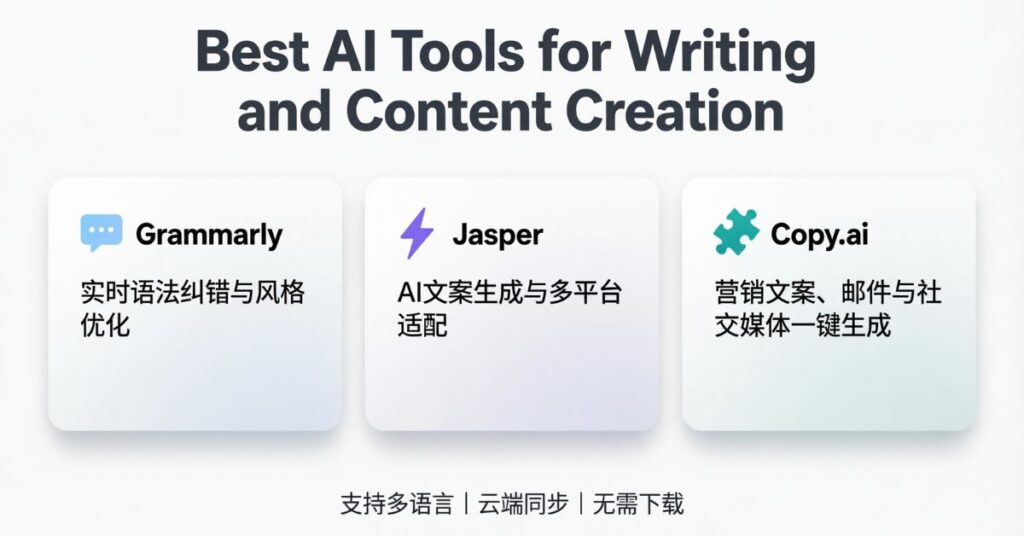
Writing is one of the most popular use cases for AI, and for good reason. Content creation is time-consuming, and AI tools have become remarkably capable at helping with everything from first drafts to polished final copy.
ChatGPT remains one of the most recognized names in AI writing. Built by OpenAI, it handles a wide range of tasks including drafting blog posts, writing emails, brainstorming ideas, and summarizing long documents. Its conversational interface makes it easy for beginners to pick up without any technical background.
Claude by Anthropic is widely praised for producing text that feels natural and human. It excels at following detailed instructions and is particularly strong when it comes to long-form writing, nuanced editing, and complex reasoning tasks. Many writers prefer it for its ability to maintain tone and voice consistently across long pieces.
Jasper is designed specifically for marketing teams and content professionals. It offers a range of templates for ad copy, blog posts, social media captions, and product descriptions. What sets Jasper apart is its focus on brand consistency, allowing teams to define a brand voice that the AI applies across all outputs.
Rytr is a more lightweight option that works well for quick content needs. It supports dozens of templates and use cases, making it versatile without being overwhelming.
For anyone producing large amounts of written content, the practical approach is to use one of these tools to generate a solid first draft, then spend your time refining rather than writing from scratch. This alone can cut content production time in half.
Best AI Tools for SEO and Digital Marketing
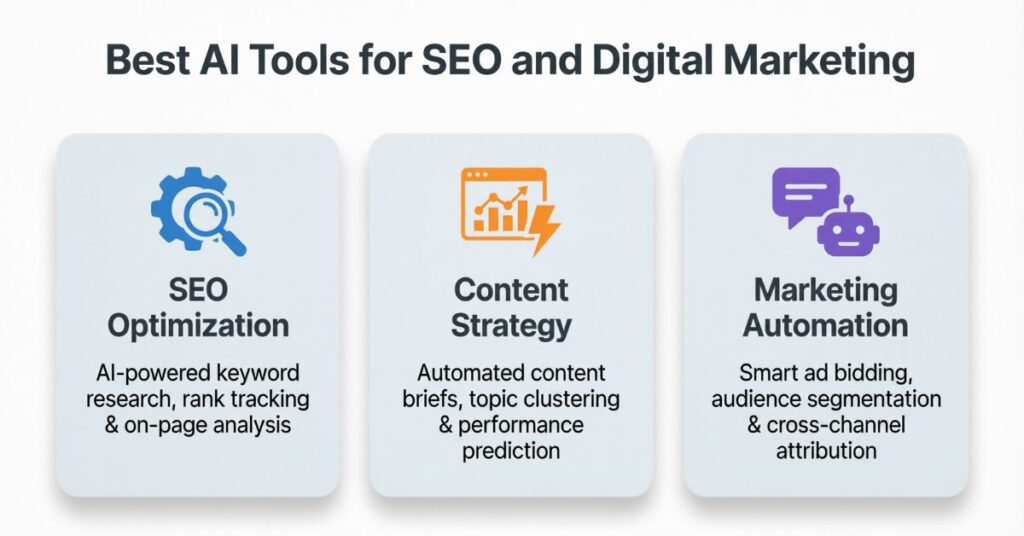
Marketing teams have been among the fastest adopters of AI, and the tools available for SEO and digital marketing have matured quickly.
Surfer SEO combines AI writing capabilities with real-time SEO scoring. As you write, it analyzes your content against top-ranking pages and gives you a score based on keyword usage, content length, and structure. This makes it easier to create content that is both readable and optimized for search engines.
SE Ranking’s AI Writer integrates directly with SEO data, allowing users to generate content briefs and articles based on what is actually ranking in search results. For content teams that want to move quickly without sacrificing SEO quality, this kind of integration is a real time-saver.
MarketMuse takes a broader approach, helping marketers understand which topics their site should cover, how thoroughly, and in what order. It is particularly useful for building content strategies around topic clusters rather than one-off articles.
Copy.ai goes beyond blog posts, offering workflow automation for marketing teams. It can help with everything from writing product descriptions to generating sequences of cold outreach emails. Its strength is in helping teams move fast without losing coherence across different content types.
The key takeaway for marketers is that AI tools work best when they are fed good inputs. The more context you give them about your audience, competitors, and goals, the more useful the output will be.
Best AI Tools for Coding and Development
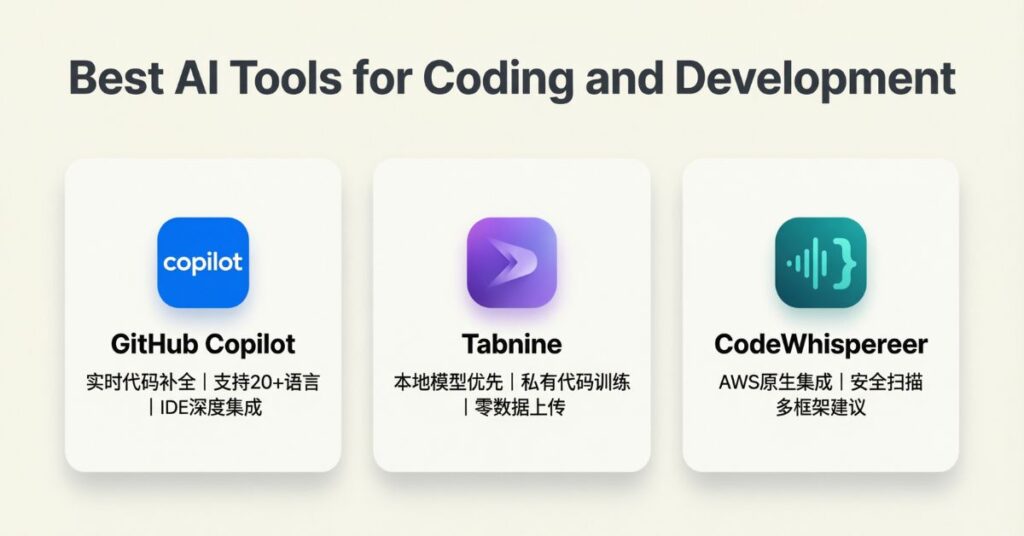
Developers have arguably benefited more than any other group from the rise of AI tools. The ability to generate, debug, and explain code in seconds has changed how software gets built.
GitHub Copilot is one of the most widely adopted AI coding tools in the world. It integrates directly into popular code editors like VS Code and suggests code completions in real time as you type. For repetitive coding tasks, boilerplate generation, and working in unfamiliar languages, Copilot dramatically speeds up the process.
Cursor is an AI-native code editor that takes things a step further. Instead of just suggesting completions, it allows you to have conversations with your codebase. You can ask it to explain what a function does, suggest a refactor, or write an entirely new feature based on a plain-language description.
Claude is increasingly used by developers for complex reasoning tasks, such as debugging tricky logic errors, reviewing pull requests, or understanding legacy code. Its ability to handle long inputs makes it useful when you need to paste in a large chunk of code and ask targeted questions about it.
For developers who want to use AI effectively, the most important habit is learning to write clear, specific prompts. Vague instructions produce vague code. The more precisely you describe what you need, the more usable the output will be.
Best AI Tools for Image and Visual Content
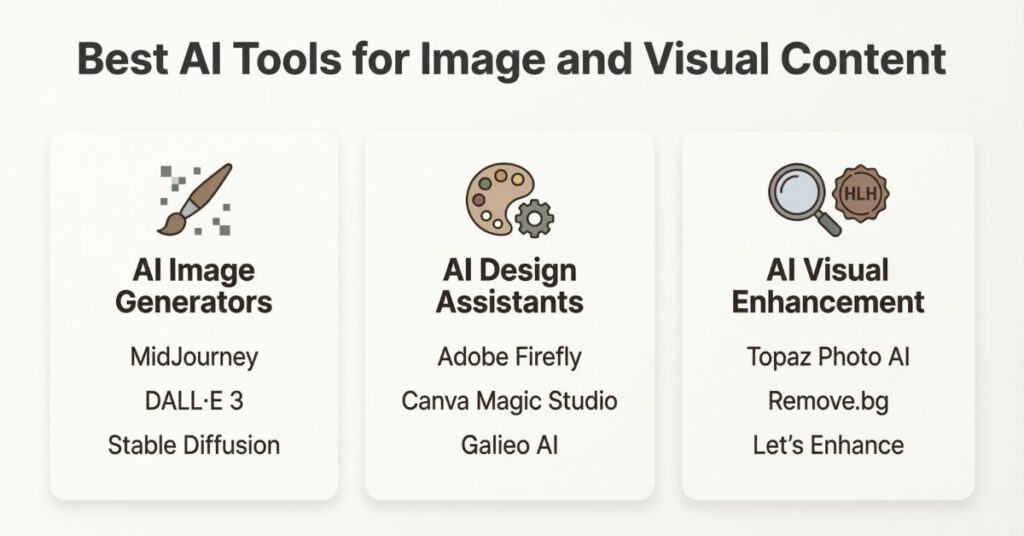
Visual content creation was once reserved for people with design skills or significant budgets. AI image tools have changed that equation completely.
Midjourney produces some of the most visually striking AI-generated images available. It works through a simple prompt-based system and has developed a strong creative community around it. For marketers, content creators, and designers looking for high-quality visuals, it remains a top choice.
DALL-E 3, integrated directly into ChatGPT, makes image generation accessible to anyone already using OpenAI’s platform. It is particularly good at following detailed prompts and generating images that match complex descriptions accurately.
Adobe Firefly is built directly into Adobe’s creative suite, making it the natural choice for designers who already work in Photoshop or Illustrator. It allows for generative fill, background removal, and image expansion in ways that feel like a natural extension of traditional design workflows.
Canva’s AI features have made it possible for non-designers to produce polished graphics quickly. Its text-to-image generation, background removal, and magic resize tools are bundled into an interface that virtually anyone can learn in minutes.
For teams without a dedicated designer, combining Canva with an AI image generator like Midjourney can cover most everyday visual content needs effectively.
Best AI Tools for Productivity and Workflow Automation
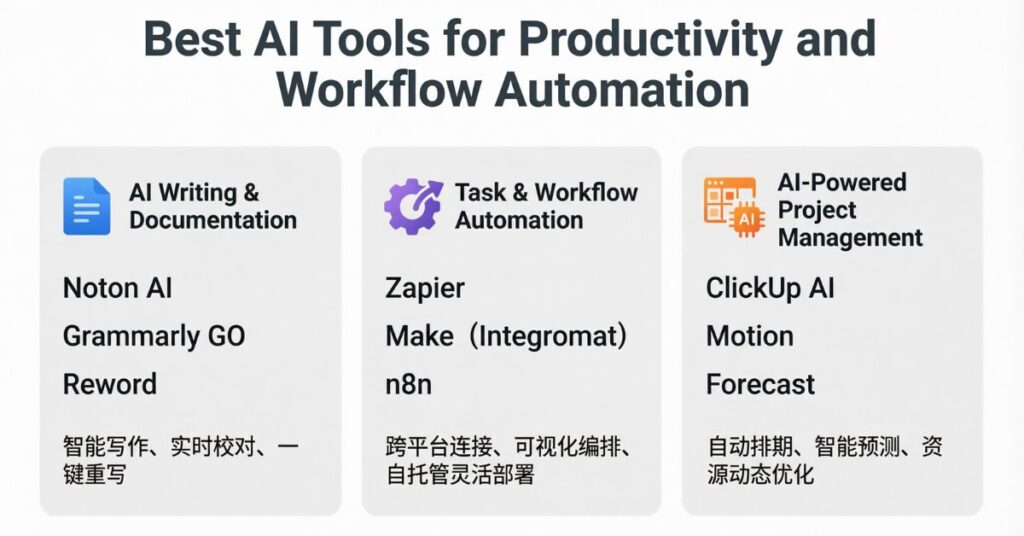
Beyond specialized categories, there is a growing class of AI tools focused on general productivity and connecting different parts of your workflow together.
Notion AI brings AI capabilities into one of the most popular productivity platforms. It can help you draft documents, summarize meeting notes, generate action items from a list of ideas, and even translate content into different languages, all within the same workspace your team already uses.
Google Gemini, integrated across Google Workspace, can summarize emails, help draft documents in Google Docs, generate formulas in Sheets, and pull relevant information from your Drive files. For teams already living in the Google ecosystem, it is one of the most seamless AI integrations available.
Zapier’s AI features allow non-technical users to build automation workflows between hundreds of apps. You can describe a workflow in plain language, and Zapier will suggest how to build it. This has made automation accessible to teams that previously needed a developer to set anything up.
Perplexity AI functions like a search engine with an AI brain. Instead of returning a list of links, it synthesizes information from multiple sources and gives you a direct, cited answer. For research tasks, competitive analysis, and quick fact-checking, it is one of the most efficient tools available.
The smartest way to use productivity AI tools is to start with the tasks that eat the most time in your current workflow. Pick one repetitive task, experiment with automating it, and build from there.
How to Choose the Best AI Tool for Your Needs
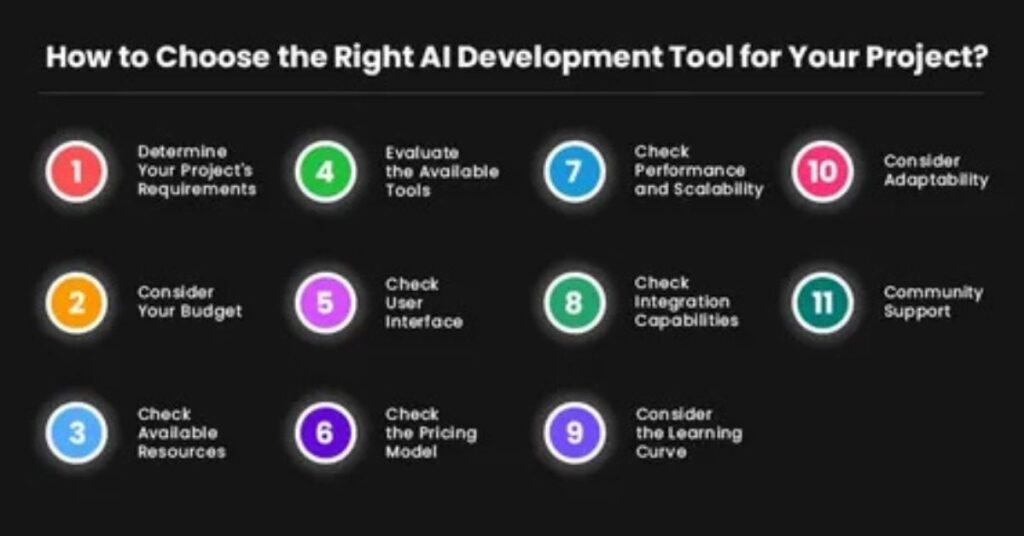
With so many options available, the decision ultimately comes down to a few honest questions.
What specific problem are you trying to solve? The best AI tool for a freelance writer is different from the best one for a software team or a social media manager. Start with your actual pain points, not the most popular tool on a list.
How much time are you willing to invest in learning? Some tools offer tremendous power but require a steeper learning curve. Others are designed to deliver value in the first session. Match the complexity of the tool to the time you have available.
Does it integrate with your existing workflow? A great AI tool that exists in isolation from everything else you use creates friction rather than reducing it. Look for tools that connect naturally to the platforms and systems you already rely on.
Finally, test before you commit. Most of the tools mentioned in this guide offer free plans or trial periods. Use them. The difference between reading about a tool and actually using it is enormous, and the only way to know if something works for you is to try it yourself.
Final Thoughts
The best AI tool is not a single piece of software. It is the combination of tools that fits your specific work, your team’s habits, and the outcomes you are trying to reach.
What is clear is that AI tools are no longer optional extras for forward-thinking professionals. They have become core parts of how competitive teams operate across writing, design, development, marketing, and beyond.
The good news is that getting started has never been easier. Most tools have generous free tiers. The barrier to entry is low. The only thing left to do is pick one area of your workflow, find the tool that fits it, and start experimenting.
The teams and individuals winning right now are not the ones who have found the single perfect AI tool. They are the ones who have built a habit of continuous experimentation, adding new tools to their stack as their needs evolve.
Start today. Your future workflow will thank you.